
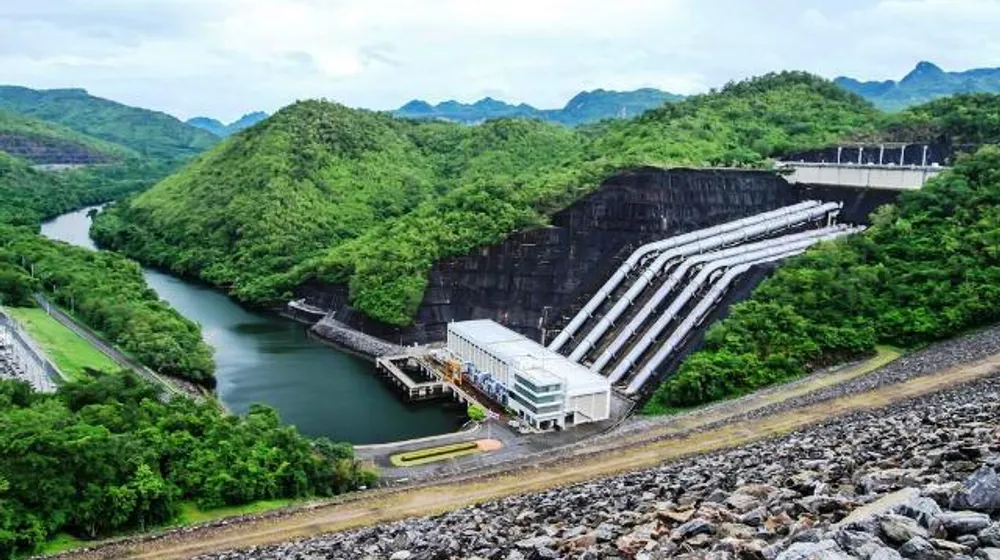
JAKARTA— The Batang Toru Hydropower Plant (PLTA Batangtoru) has recently come under renewed public discussion following the dissolution of a discussion forum concerning the renewable energy project.
Located in South Tapanuli, North Sumatra, the hydropower plant has also drawn attention following a collaborative report by five national media outlets highlighting the potential risks posed by the project to the Batang Toru landscape.
The Batang Toru Hydropower Plant is part of the government’s program to meet electricity demand and support economic growth, particularly in Sumatra.
Developed by PT North Sumatra Hydro Energy (NSHE), the hydropower plant will become the largest hydropower facility within Sumatra’s electricity system, with a capacity of up to 510 MW, according to information cited from plta-batangtoru.com.
The Batang Toru Hydropower Plant utilizes renewable energy by harnessing the potential of water resources from the Batang Toru River.
Part of the Renewable Energy Development Program
The Batang Toru Hydropower Plant project is part of the government’s program to increase the share of renewable energy in Indonesia’s energy mix to 23% by 2025. As of 2022, renewable energy accounted for only 14.11% of Indonesia’s energy mix.
Built on an area of 122 hectares, the Batang Toru Hydropower Plant is also claimed to reduce fuel consumption by the equivalent of US$383 million, or approximately IDR 5 trillion, per year. The electricity generated by the plant will later be transmitted through PT PLN (Persero)’s 275 kV transmission network.
The Batang Toru Hydropower Plant is also expected to increase the electrification ratio in South Tapanuli, which currently stands at 82.32%. The renewable energy facility is also expected to support approximately 15% of North Sumatra’s peak electricity demand.
The project, a collaboration between the governments of Indonesia and China, was expected to commence operations in 2025. The target was delayed by three years due to the COVID-19 pandemic and several environmental issues surrounding the Batang Toru Hydropower Plant. Previously, the plant was expected to begin operations in August 2022.
The project, which began construction in 2016, was previously considered a potential threat to the area and the orangutan habitat. The project, one of the initiatives under the 35,000-megawatt (MW) accelerated electricity generation program, was also considered to be located in an earthquake fault zone. The Civil Society Coalition for Environmental Protection stated that numerous landslides had occurred in the area, resulting in human casualties, including workers.
Nevertheless, several improvements have been implemented to protect wildlife habitats in accordance with recommendations from relevant ministries. One of these measures is the construction of wildlife corridors, such as connecting trees, to facilitate the movement of wildlife, including orangutans, as cited from esdm.go.id.
The project operator has also been monitoring the orangutan population and habitat within and around the project area by installing 27 camera traps. An additional 30 cameras are planned to be installed. Awareness programs on wildlife protection are also continuously conducted to ensure that relevant stakeholders share a common understanding of environmental conservation.
https://www.trenasia.id/profil-plta-batang-toru-proyek-penghasil-listrik-510-megawatt-untuk-peningkatan-bauran-ebt